Seeking Forgiveness From Allah
During the second set of ten days of Ramadan, Muslims focus on seeking forgiveness from Allah the Almighty. The Ramadan Space offers a variety of interactive elements designed to help elevate your spiritual knowledge throughout this blessed month.
The Blessings of Sehri
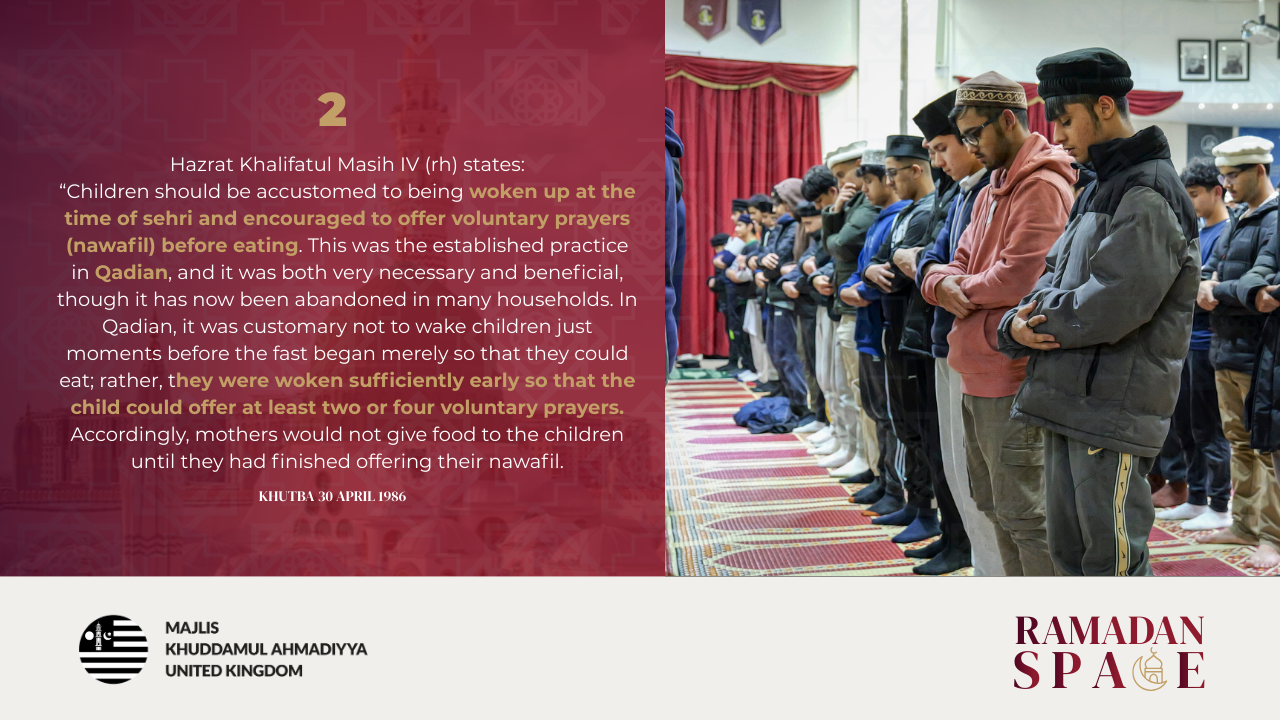
Sehri is the blessed pre-dawn meal that Muslims eat before the Fajr prayer to begin their fast. Here are a few points that reflect the importance and blessings of having Sehri.
1. Encouragement of Eating at Sehri
The Holy Prophet ﷺ used to encourage eating sehri saying that it contained blessings (Bukhari 1923)
2. Call to Prayer
If the Azan starts you can finish whatever you are eating or drinking.
3. Practices of the Promised Messiah (as)
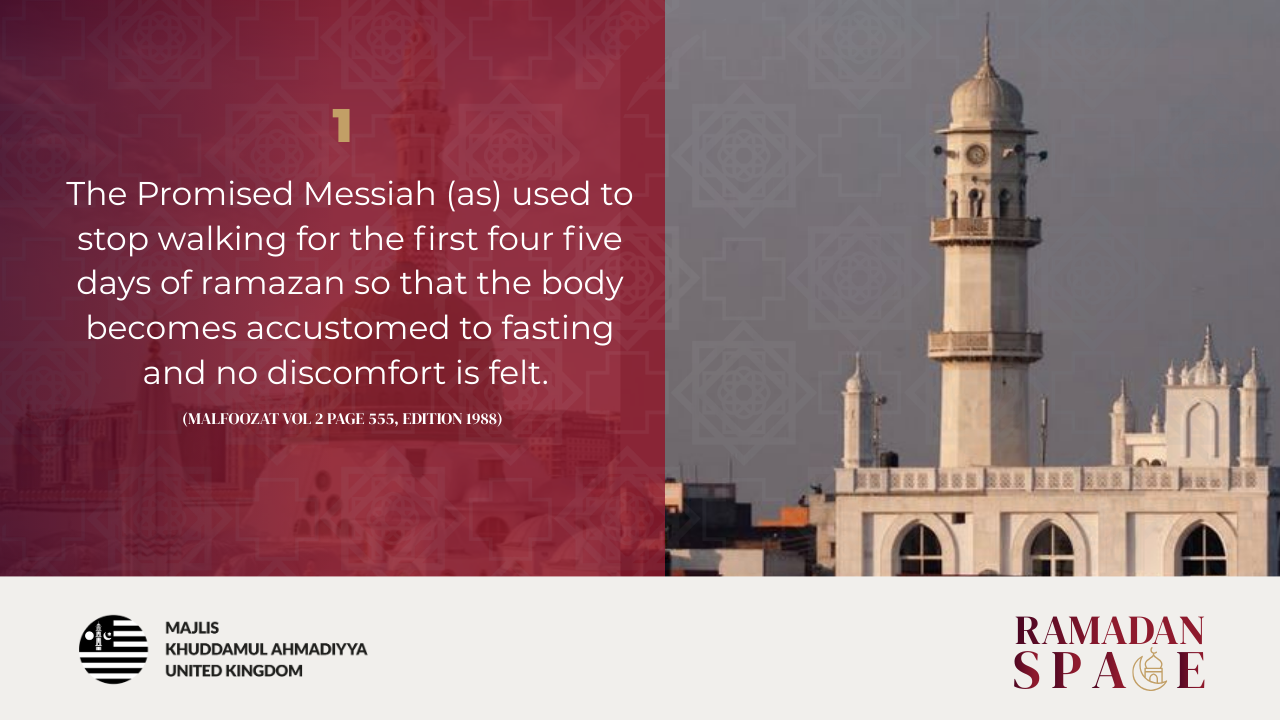
The Promised Messiah (as) used to eat sehri and also arrange for those guests who would visit him in Qadian during Ramazan (Seeratul Mahdi vol 2 page 127)
3 Facts About Repentance
Seeking Repentance
1. The Holy Prophet (sa) used to seek repentance 70 times a day (Sahih Muslim, Kitab al-Zikr wal-Dua wal-Taubah wal-Istighfar, Hadith 2702)
Acceptance of Repentance
2. Even if someone’s sins reached heaven, and then they repented, his/her repentance would be accepted. (Sunan Ibn Majah, Kitab al-Zuhd, Hadith 4248)
Daily Routine
3. Making it a daily routine to ask forgiveness for one’s sins is mentioned in the third condition of Bai’at.
Three Conditions of Repentance (Malfuzat, Vol. 1, pp. 135-136)
1
The first condition for repentance is to abandon one’s evil thoughts and ill fancies called Iqla in Arabic
2
The second condition is to feel regret and remorse also called nadam
3
The third condition is to make a firm resolve to never revert to these vices in the future called azm in Arabic.
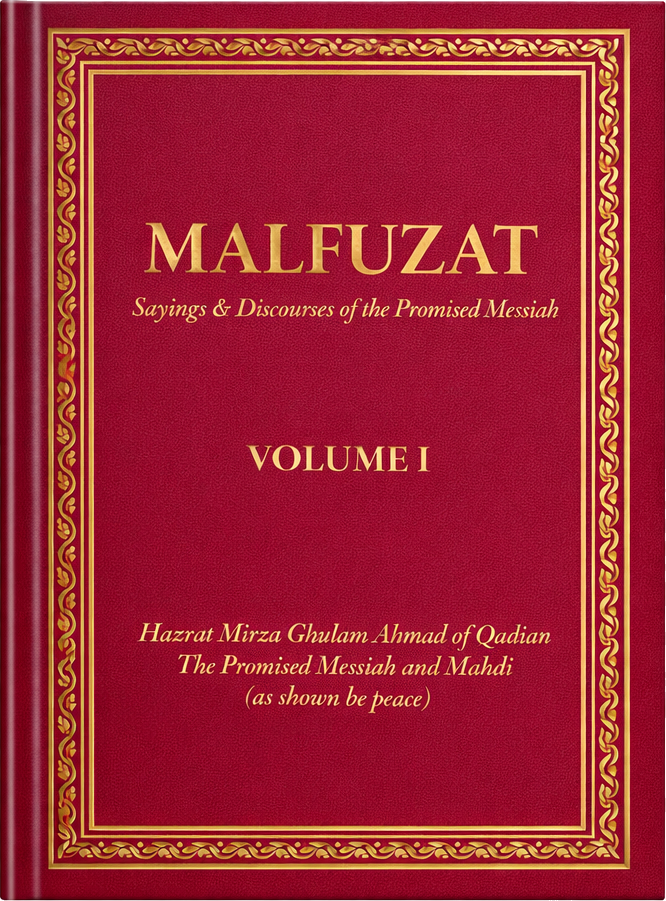
Mulfzat Volume 1
“Malfuzat” refers to the holy and insightful words of the Founder of the Ahmadiyya Muslim Community, Mirza Ghulam Ahmad of Qadian, the Promised Messiah and Mahdi, on whom be peace, which he expressed verbally from time to time in his pure and holy gatherings or before congregations at the Annual Convention, for the purification of his followers and for their spiritual and moral training, thus enabling them to forge a living relationship with God; to teach the knowledge and wisdom of the Holy Quran; to revive the religion of Islam and to establish the shariah of Muhammad, peace be upon him.
LANGUAGE
EN
English
LANGUAGE
UR
Urdu
A Comprehensive prayer from Hadith about Forgiveness of Sin (Syed-ul-Istighfar)
اللّٰهُمَّ أَنْتَ رَبِّي، لَا إِلٰهَ إِلَّا أَنْتَ، خَلَقْتَنِيْ وَأَنَا عَبْدُكَ، وَأَنَا عَلَى عَهْدِكَ وَوَعْدِكَ مَا اسْتَطَعْتُ، أَعُوْذُ بِكَ مِنْ شَرِّ مَا صَنَعْتُ، أَبُوءُ لَكَ بِنِعْمَتِكَ عَلَىَّ وَأَبُوءُ لَكَ بِذَنْبِيْ، فَاغْفِرْ لِيْ، فَإِنَّهُ لَا يَغْفِرُ الذُّنُوْبَ إِلَّاأَنْتَ۔
Allahumma anta Rabbi la ilaha illa anta, Khalaqtani wa ana ‘abduka, wa ana ‘ala ‘ahdika wa wa‘dika mastata‘tu, a‘udhu bika min sharri ma sana‘tu, abu-u laka bini‘matika ‘alaiyya, wa abu‘u laka bidhanbi faghfirli, fa-innahu la yaghfirudh-dhunuba illa anta.
O Allah, You are my Lord; there is no god except You. You created me and I am Your servant. And I abide by Your oath and promise [that I may honour it] to the best of my ability. I seek refuge with You from every evil I have committed. I acknowledge Your favour upon me and I acknowledge my sin, so forgive me, for surely there is no one who can forgive sins except You
4 facts about Syed-ul-Istighfar
1
It is the most superior way of asking for forgiveness from Allah
2
If one makes it a habit to recite Istighfar every day, and recites it once after every prayer, then Allah will forgive all his sins.
3
If One recites Syed-ul istighfar, his heart inclined towards good deeds, his heart will be pleased with the worship of Allah.
4
If somebody recites it during the day with firm faith in it, and dies on the same day before the evening, they will be from the people of Paradise; and if somebody recites it at night with firm faith in it, and dies before the morning, they will be from the people of Paradise. (Sahih al-Bukhari, Kitab al-Da‘wat)
3 benefits of waking up in the night for prayers
1
Verily, getting up at night is the most potent means of subduing the self and most effective in respect of words of prayer.
(73:7)
2
And wake up for it (the Qur’an) in the latter part ofthe night as a supererogatory service for thee. It may be that thy Lord will raise thee to an exalted station.
(17:80)
3
“Allah descends every night to the lowest heaven and says: Who is asking forgiveness so I may forgive him?”
(Muslim 1657)

Zikr-i-Ilahi & the Tahajjud Prayer
The article explores the spiritual importance of Zikr-i-Ilahi (remembrance of Allah) and the Tahajjud prayer, drawing from a historic address by Hazrat Mirza Bashiruddin Mahmoud Ahmad during a time of global turmoil. It emphasises that true peace and spiritual strength are achieved through consistent remembrance of God and sincere night worship.
Alongside the historical context, the article provides practical guidance on developing the habit of Tahajjud, offering clear, disciplined steps to help believers wake for night prayer with sincerity and focus. Overall, it presents Tahajjud and Zikr as essential tools for spiritual growth, self-reform, and strengthening one’s relationship with Allah.
LANGUAGE
EN
English
4 facts about the night worship of the Holy Prophet (ﷺ)
11 Raka'at
1. The Holy Prophet (ﷺ) would not offer more than 11 raka’at (8 nawafil and 3 witr) during night time
Special Recitation of Verses
3. During nawafil prayers when the Holy Prophet ﷺ would pass by a verse that contained a supplication, he would make that supplication; and when he would pass by a verse in which seeking Allah’s protection was mentioned, he would seek protection. (Muslim 1283)
Repetition of a Verse from the Holy Qur'an
3. One night, the Holy Prophet (sa) stood in prayer reciting a single verse of the Holy Qur’an repeatedly. (Tirmadhi 448)
Devotion to performing voluntary prayers at night
4. The Holy Prophet (sa) would perform voluntary night prayers (Tahajjud) with such intense devotion and for such long durations that his feet would swell and crack.
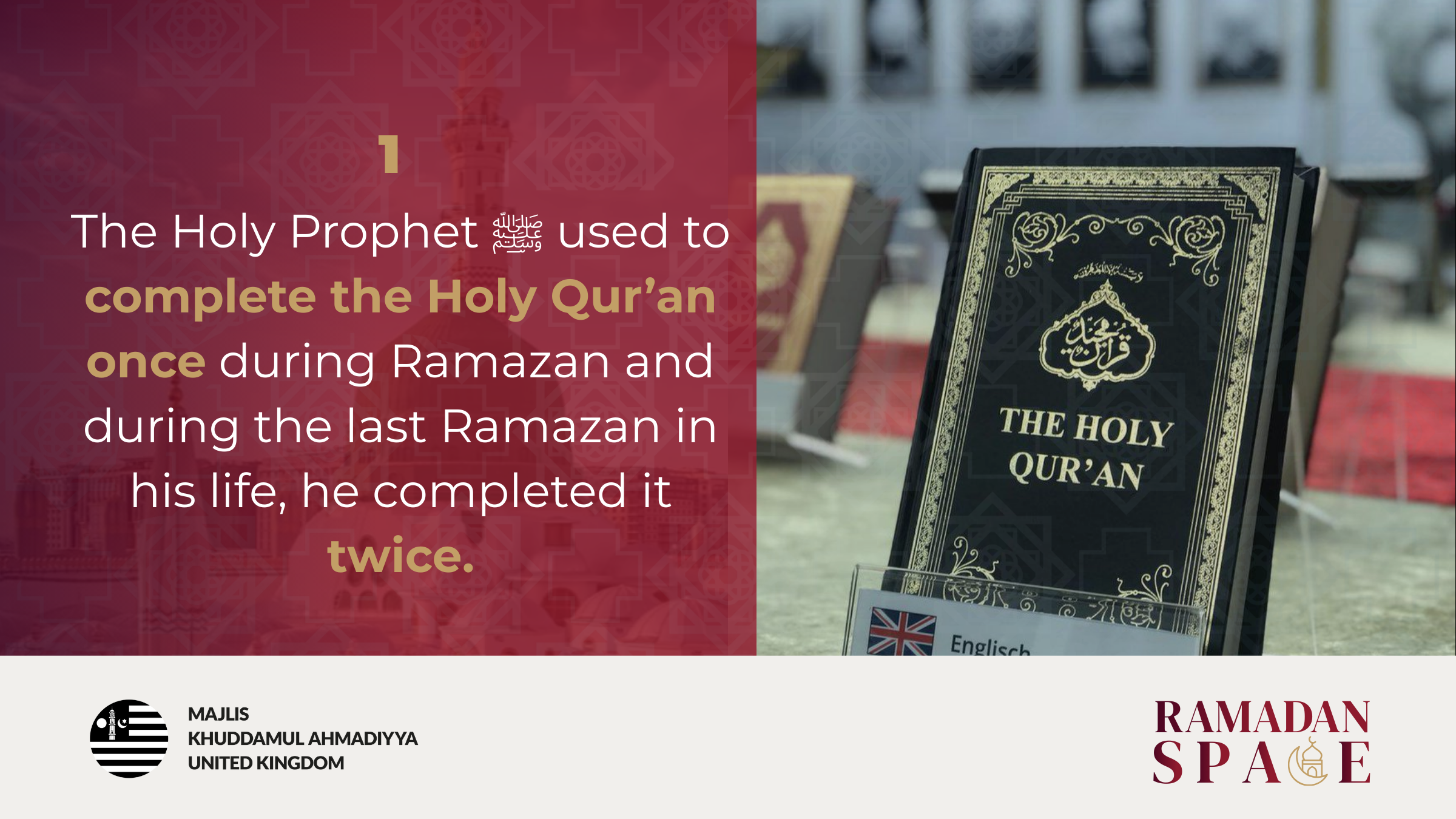
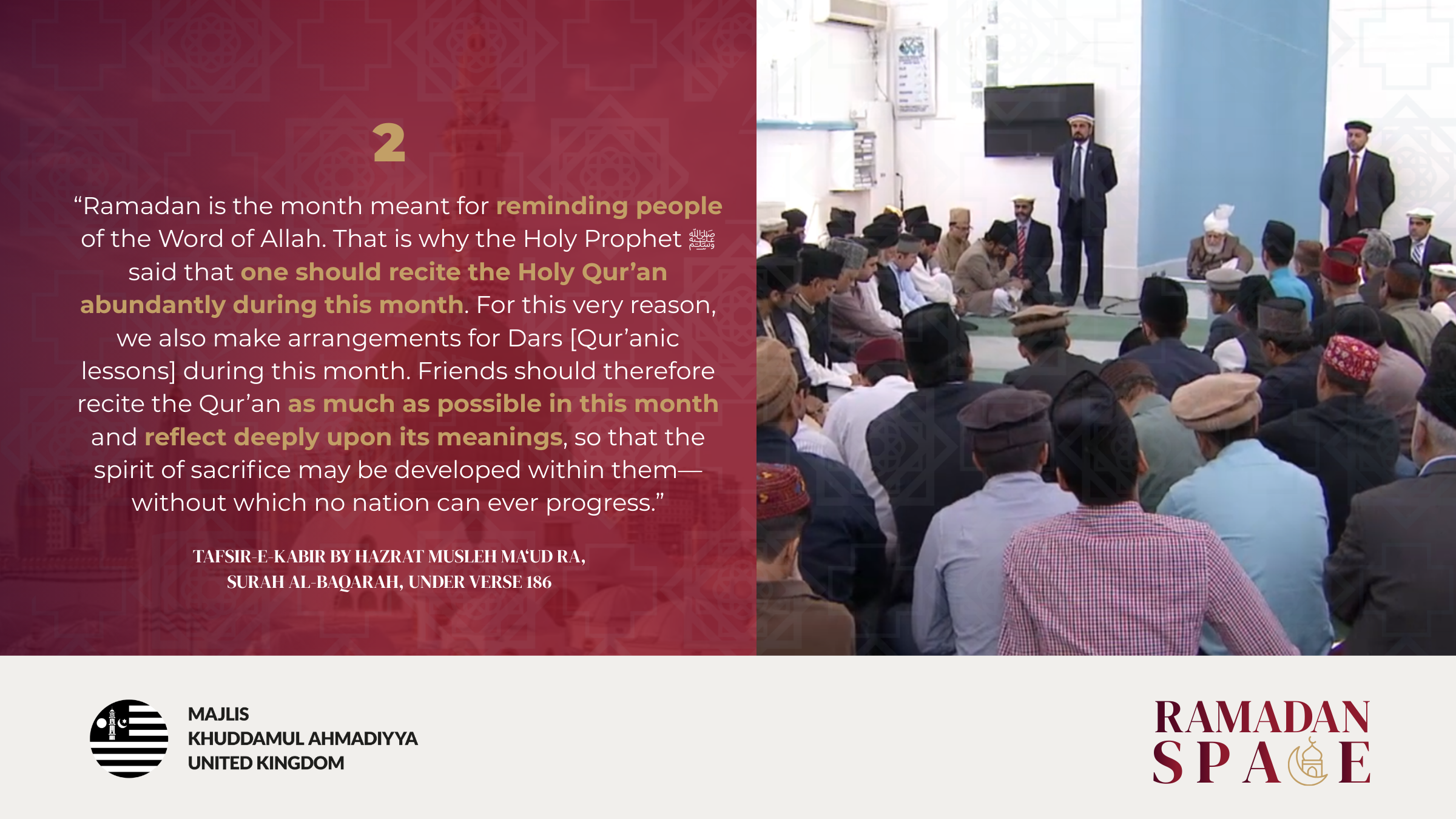
The Holy Qur'an and Ramadan
In Surah Al-Baqarah, Allah The Almighty States:
شَہۡرُ رَمَضَانَ الَّذِیۡۤ اُنۡزِلَ فِیۡہِ الۡقُرۡاٰنُ ہُدًی لِّلنَّاسِ
The month of Ramadan is that in which the Qur’an was sent down as a guidance for mankind,
Surah Al-Baqarah (Chapter 2, Verse 186)
Ramadan in Qadian